Moving From Screens Into the Real World
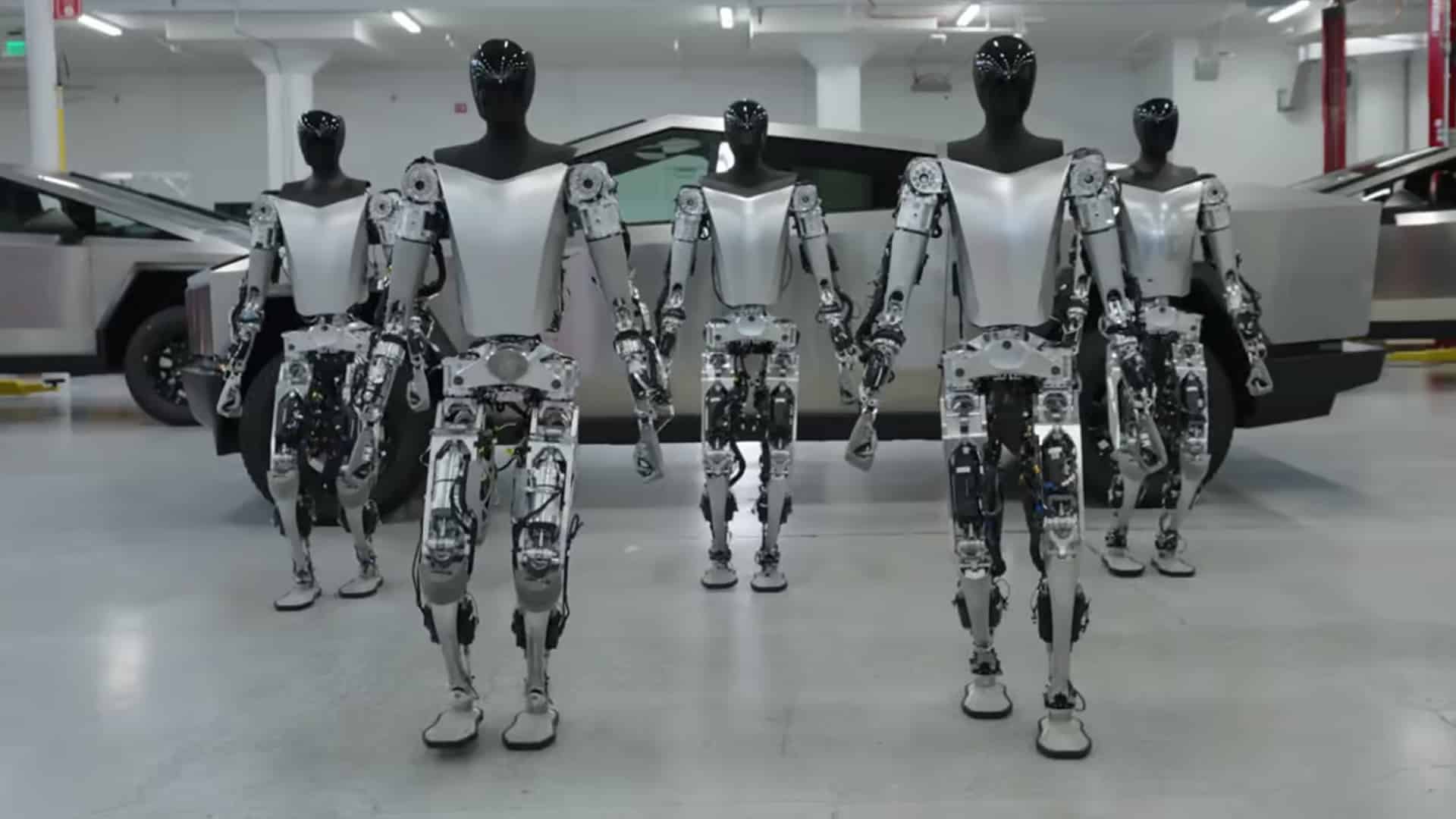
Physical AI is becoming one of the most important technology stories of 2026 because intelligence is no longer confined to software interfaces. Instead of only generating text, images, or code, AI systems are being designed to perceive environments, understand instructions, and act through robots, machines, and autonomous systems in the physical world.
Microsoft Research describes this shift as the point where agentic AI meets physical systems, opening a new phase for robotics similar to what foundation models did for language and vision.
That matters because the real economy still runs on movement, handling, inspection, assembly, transport, and coordination. A chatbot can optimize a workflow on paper, but it cannot move boxes through a warehouse, sort packages at speed, or navigate a factory aisle. Physical AI closes that gap by combining perception, planning, and control with robotic hardware.
What Is Physical AI?
Physical AI refers to AI systems that can interpret the world through sensors and then act on it through machines. In practice, that includes humanoid robots, autonomous mobile robots (AMRs), robotic arms, and warehouse systems.
Perception
Computer vision and LiDAR reading dynamic environments.
Planning
Vision-language-action (VLA) models decoding physical logic.
Action
Learned kinematic control allowing precise physical manipulation.
This is much harder than standard software automation. The physical world is messy. Objects shift position, lighting changes, humans move unpredictably, and safety constraints are non-negotiable. Figure’s Helix system is one example of that trend, described as a vision-language-action model built for real-world manipulation tasks in logistics.
Humanoid Robots Move Closer to Real Work
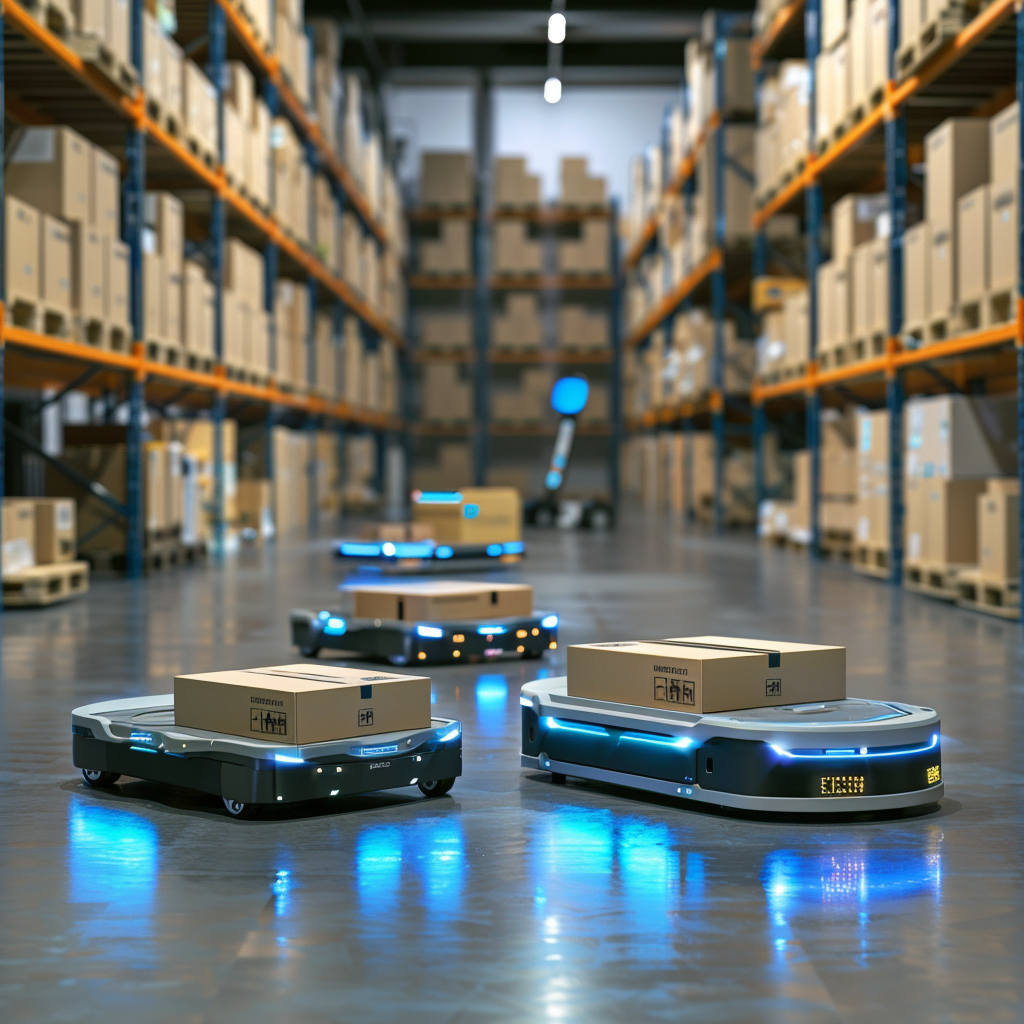
For years, humanoid robots were treated as futuristic prototypes. That is changing. Tesla says Optimus is being developed as a general-purpose, bi-pedal autonomous humanoid robot intended to perform unsafe, repetitive, or boring tasks.
Figure is pushing in the same direction. In early 2025, the company introduced a real-world logistics application for package manipulation and triaging. It also announced BotQ, a manufacturing facility designed for high-volume humanoid robot production, with an initial capacity target of 12,000 robots per year.
The reason humanoids attract attention is practical: warehouses, tools, carts, and workstations were built for human bodies. A humanoid form factor allows companies to adapt to existing environments with less infrastructure redesign.
Industrial Automation Is Becoming More Autonomous
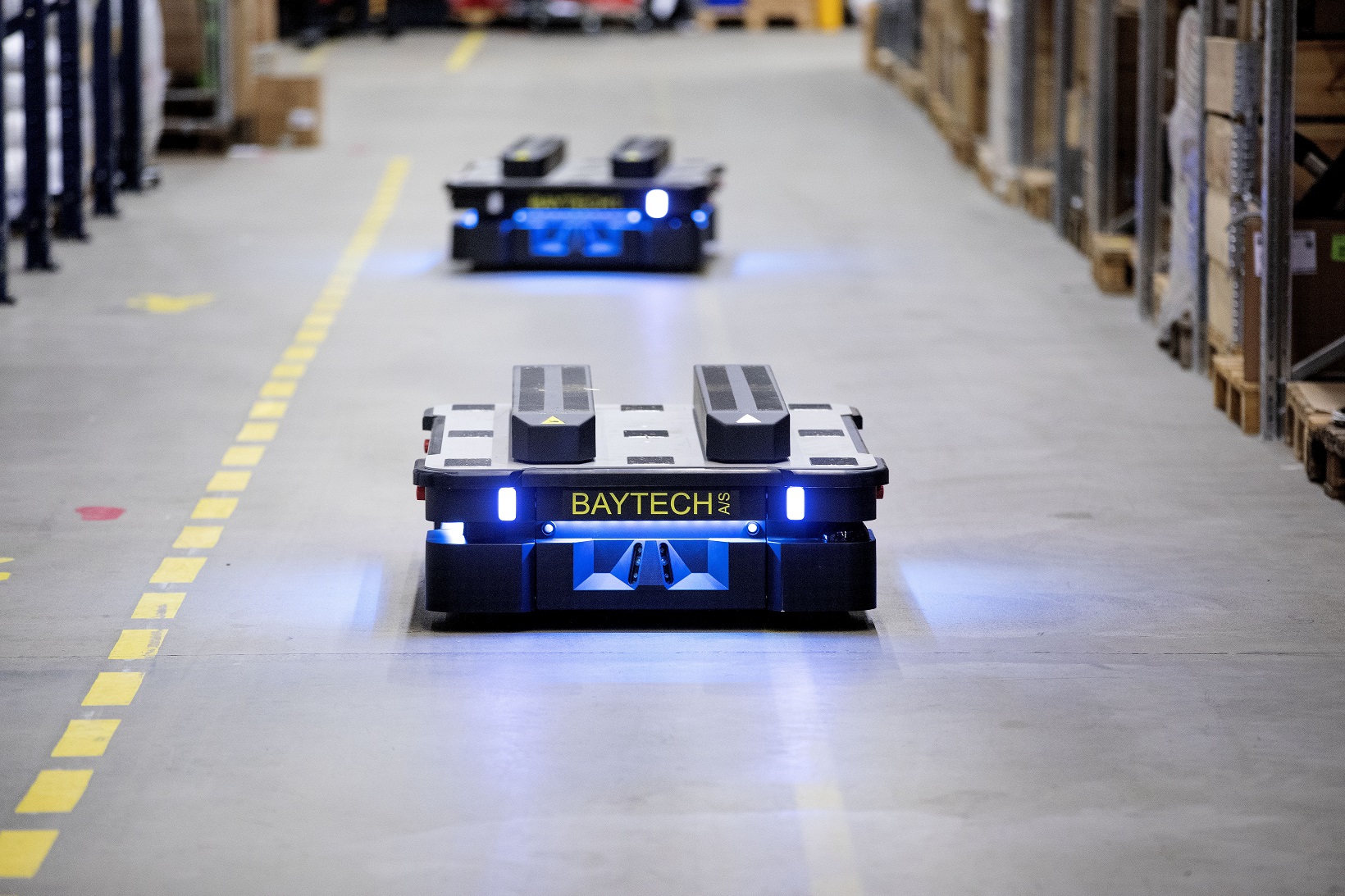
The broader and more immediate story is not just humanoids. In warehouses and logistics centers, Autonomous Mobile Robots (AMRs) are moving goods, supporting picking operations, and improving internal transport flows.
Adoption
Rockwell Automation describes AMRs as AI-powered systems for material handling, while industry resources like Advantech outline their growing use because they can navigate dynamically rather than follow only fixed routes. Academic research on Logistics 4.0 argues that autonomous trucks and vehicles are becoming increasingly important due to workforce constraints and efficiency pressures.
Embodied VLA (Vision-Language-Action) Simulator
Observe how Physical AI connects natural language commands, visual perception, and robotic kinematics in real-time environments.
Why This Trend Matters for Business
For businesses, the appeal of Physical AI is simple: it extends intelligence into places where labor, time, movement, and safety directly affect margins. A company that uses AI only for reports or customer support is still leaving physical bottlenecks untouched. A company that combines AI with robotics can start redesigning warehouse throughput, manufacturing cadence, maintenance workflows, and material handling.
There is also a competitive angle. Early adopters can learn how to redesign workflows around mixed human-machine teams before the technology becomes standard. At the same time, the risks are real: robotics deployment requires capital, safety validation, systems integration, and realistic expectations. Physical AI will not replace every worker or solve every operational problem overnight. What it is doing is creating a new layer of machine capability that can take on specific physical tasks with increasing flexibility.
The Road Ahead
The most important takeaway is that AI is no longer just a screen-based experience. It is becoming embodied. Humanoid robots like Tesla’s Optimus and Figure’s platforms are drawing attention because they represent a future in which machines may adapt to human-built environments.
Meanwhile, autonomous mobile systems and industrial logistics robots are already showing how Physical AI can create value in the present. The next few years will likely be defined by a mix of high-profile humanoid experiments and quieter, faster adoption of autonomous systems in supply chains.
Intelligence is no longer just something we consult. It is becoming something that moves, lifts, navigates, sorts, and works.
Frequently Asked Questions
Physical AI is AI that can perceive the real world and act through machines such as robots, autonomous vehicles, and industrial systems. It combines sensing, planning, and control rather than staying limited to screen-based outputs.
They are moving closer to industrial use, but deployment is still early. Tesla positions Optimus for repetitive and unsafe tasks, and Figure has showed logistics-oriented applications while also investing in scaled manufacturing capacity.
They are used for material handling, warehouse transport, internal movement, and other repetitive logistics tasks. AMRs are especially important because they can navigate more flexibly than fixed-route systems.
Because it brings intelligence into real operational environments, helping companies improve throughput, reduce repetitive manual work, and automate parts of logistics and manufacturing that software alone cannot handle.
>> Bibliographic_References.log
- [01] Microsoft Research. Advancing AI for the physical world.
- [02] Tesla. AI & Robotics.
- [03] Esade. The Future of AI in Business. Beyond by Esade, 2025.
- [04] Figure. Helix Accelerating Real-World Logistics. Figure AI, 2025.
- [05] Kim, E. et al. (2022). The Necessity of Introducing Autonomous Trucks in Logistics Systems. Sustainability.