Aesthetics Lab

What Is Generative Art?

A Clear Guide Beyond the AI Hype

0%
System Autonomy
0%
Algorithmic
0
Early Origins
Abstract Code and Systemic Art

System-Based Creativity

The artist designs the rules, the machine executes them.

More Than AI

Exploring the roots of procedural making.

Advertisement
Introduction

Beyond the AI Hype

If you have been seeing the phrase generative art everywhere lately, you are not imagining it. The term has become much more visible because of AI image tools, NFT culture, and the wider conversation around art and technology.

But generative art is not the same thing as AI art, and reducing it to that misses most of what makes the field interesting. Tate defines generative art as art made using a predetermined system that often includes an element of chance, and the V&A notes that the term now generally refers to works that use a set of rules to make an artwork.

That is the key idea to hold onto. In generative art, the artist is not always composing one final image directly, stroke by stroke, in the traditional sense. Instead, the artist creates a system, a logic, a process, or a set of instructions, and that system participates in producing the work. Sometimes that system is code. Sometimes it is a rule-based drawing process. Sometimes it is chance. Sometimes it is robotics, data, interaction, or machine learning. The medium can change, but the structure stays recognizable: the artist designs the conditions, and the artwork emerges through them.

So what exactly counts as generative art?

A useful way to think about generative art is this: the artwork comes from a process the artist builds, not only from a single manually fixed outcome. That process may produce one result, many results, or potentially endless variations. The system can be strict or loose, highly controlled or open to surprise. It may rely on geometry, randomness, repetition, simulation, data, or instructions executed by a person or a machine.

This is why generative art sits so naturally inside digital culture. Computers are very good at following rules, repeating processes, and producing variation. But generative thinking is older than today’s software tools. The Toledo Museum of Art notes that artists have long used instructions and rule-based systems to produce work, and MIT’s writing on Sol LeWitt points out how instruction-based art can generate new iterations over time rather than existing as one permanently fixed object.

The Authorship Spectrum

Interactive Visualization: Human vs. System Control

HUMAN EXECUTION (Manual Control) 40%
SYSTEM AUTONOMY (Rules/Algorithms) 60%

"The artist designs the system, the rules, and the boundaries; the system executes the variations."

Generative art is not just AI art

This is where a lot of blog posts get muddy. AI art is one branch of a larger tree, not the whole forest. The V&A places generative art within the wider field of digital art alongside computer, robotic, kinetic, net, VR, and AR practices, which already tells you that generative art is broader than today’s AI boom.

A simple distinction helps here:

  • Generative art is the broader category. It can involve any rule-based or system-based process that produces the work.
  • AI art is one specific subset, where machine learning models are part of that process.

So if someone writes a p5.js sketch that generates thousands of shifting geometric compositions, that is generative art. If an artist creates a wall drawing from written instructions that others can execute again and again, that can also be understood as generative. If an artist trains a model and builds a data-driven visual environment from it, that is generative too, but it is specifically AI-based generative art.

Why generative art matters

What makes generative art so compelling is that it changes the artist’s role. Instead of only making an image, the artist makes a system that can make images, or movements, or patterns, or behaviors. Casey Reas describes computational art as opening new ways of thinking about how images are generated, how they signify, and how they are experienced.

That shift matters because it introduces variation, emergence, and unpredictability into the work. The artist still decides the visual language, the constraints, the logic, and the degree of chance, but the result is not always fully predetermined in the old sense. This is one reason generative art feels so alive: it is often less about a frozen image than about a living procedure.

Advertisement
The Pioneers

Examples of generative art beyond AI

The easiest way to understand generative art is through examples, especially examples that show how broad the field really is.

Vera Molnar

Vera Molnár

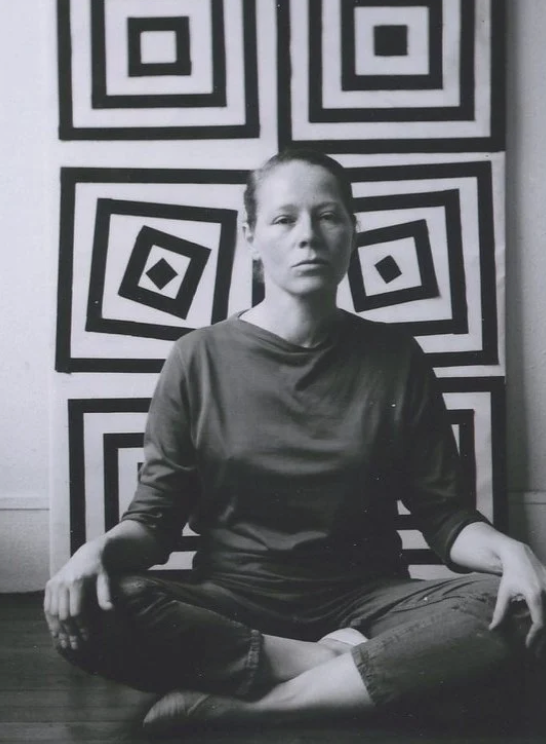
Vera Molnár is widely recognized as a pioneer of computer and algorithmic art. The V&A describes her as a pioneer of computer art, and MoMA lists works by her online, including early geometric and system-based pieces.

Molnár used the phrase machine imaginaire to describe her way of thinking through rule-based visual languages. She makes it impossible to say generative art started with today’s AI tools. It did not. Molnár was already treating rules, variation, and computation as artistic material decades ago.

Sol LeWitt

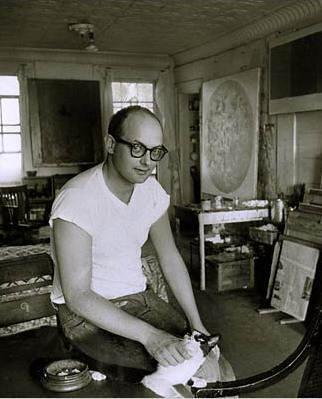
Sol LeWitt is not usually introduced to people as a digital artist, but he is deeply useful for understanding generative thinking. MIT describes his wall drawings as works built from instructions that can be executed repeatedly in different contexts.

The important thing here is that the artwork is not just the final drawing on the wall; it is also the instruction system that generates it. That makes LeWitt a great example of how generative art is about process, not only about computers.

Abstract architectural lines representing Sol LeWitt instructions
Code driven generative organic forms

Casey Reas

Casey Reas is one of the clearest contemporary examples of software as an artistic medium. His own site describes computational art as a way of exploring how images are structured and generated.

Reas is also co-creator of Processing, a language and environment designed to support visual art and creative coding. His work shows generative art in a form many will immediately recognize: code creating visual systems that evolve, repeat, and produce new outcomes.

Refik Anadol

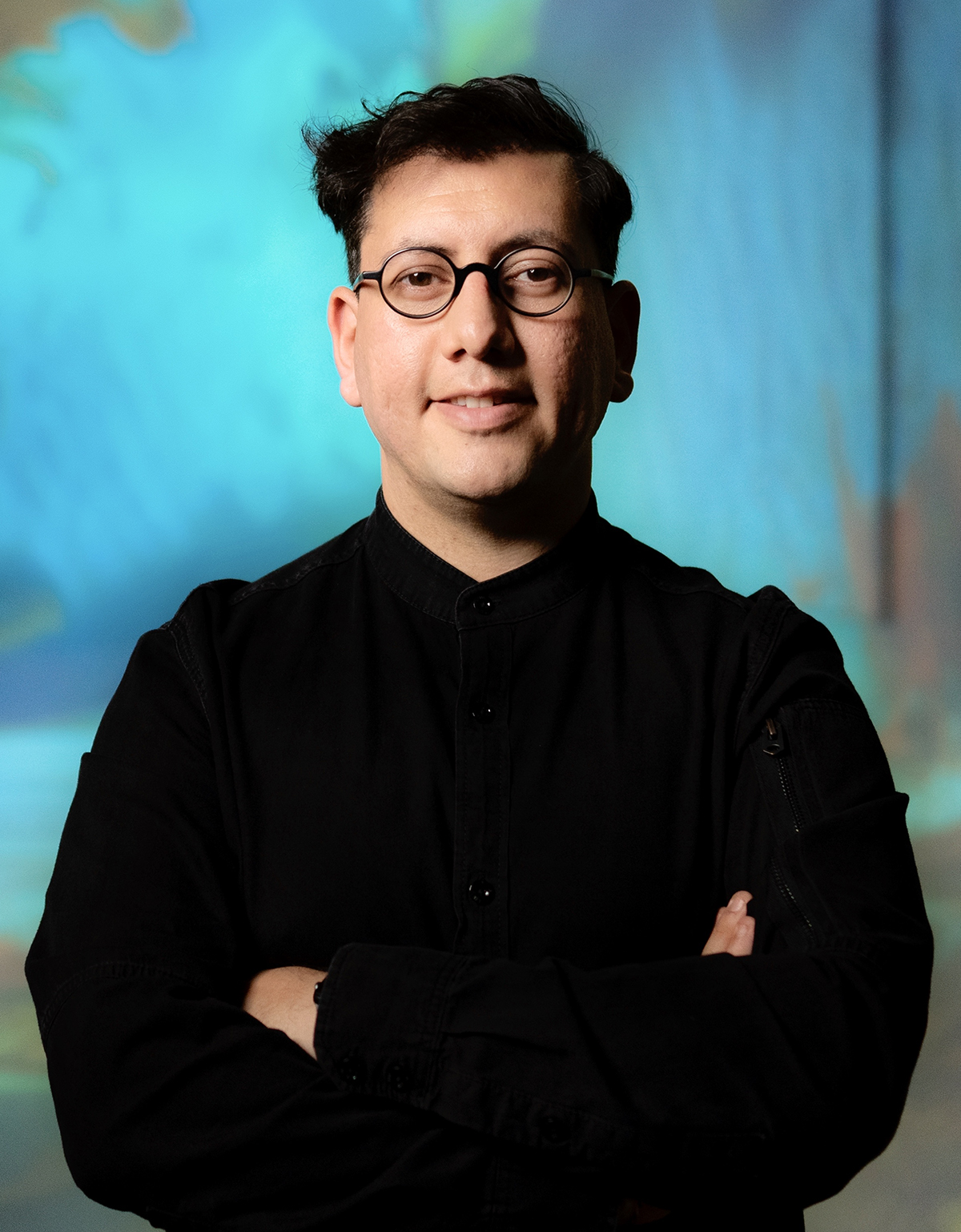
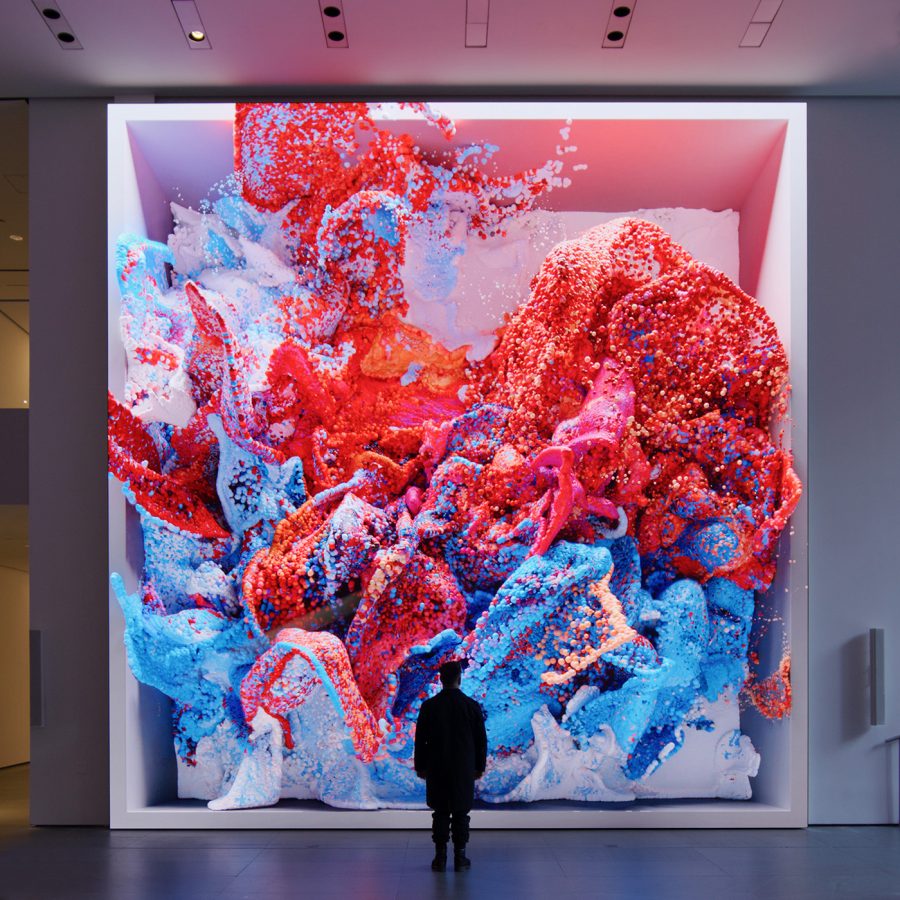
Refik Anadol is often discussed through AI, but his work is also helpful because it shows how generative art can become immersive, architectural, and data-driven. MoMA describes his practice as exploring new realms through data-driven machine processes.

He is a good example of how generative art can move beyond a screen and become an environment, something viewers enter rather than simply look at.

Fluid data architecture and immersive LED mapping
Robotic arm drawing collaborating with human

Sougwen Chung

Sougwen Chung’s work blends bodily gesture, robotics, machine systems, and drawing. The V&A discusses a recurrent neural network model as part of the work, emphasizing exploration of collaboration between human and machine mark-making.

This shows another important truth: generative art does not have to look like abstract code on a screen. It can also take the form of performance, robotics, and embodied interaction.

What generative art can be made with

Generative art is not tied to one single tool. It can be made with coding environments, physical systems, or hybrid setups. The V&A’s definition of digital art spans computer, generative, robotic, kinetic, net, VR, and AR art, which reflects how wide the ecosystem is.

Some common tools and approaches include creative coding environments such as Processing and p5.js, data-driven installations, rule-based drawing instructions, plotter drawings, robotics, and machine learning systems. What makes all of them generative is not the software brand or the hardware setup, but the fact that the artist is building a system that produces the work.

Common misconceptions about generative art

One of the biggest misconceptions is that generative art means "the machine did everything." In serious generative work, that is usually not the point. The artist decides the rules, the form of randomness, the constraints, the aesthetics, and the structure of the process. The system is not replacing authorship so much as redistributing it across a designed procedure.

Another misconception is that generative art has to be abstract. Many generative works are abstract, but they do not have to be. The core question is not whether the result looks geometric or glitchy. The real question is whether the artwork emerges from a rule-based or system-based process.

And the third misconception, maybe the most common now, is that generative art only arrived with AI. The historical record makes that impossible to defend. Museum and scholarly sources place generative and computer-based rule systems firmly in the mid-twentieth century and connect them to even older traditions of instruction, pattern, and procedural making.

Final Thoughts

Generative art is not just art made by AI, and it is not just a passing digital trend. It is a broader artistic approach built around systems, instructions, rules, variation, and emergence. Sometimes it looks like geometry on paper. Sometimes it looks like code. Sometimes it becomes a robotic drawing, an immersive projection, or a data-driven environment. What connects these forms is that the artist creates the conditions for the work to happen, rather than fixing every detail of a single outcome in advance.

That is why generative art matters. It expands what art can be. It shifts the artist from image-maker to system-designer. And it reminds us that creativity is not only about the final object on display, but also about the process that brings it into being.

>> Bibliographic_References.log

  • [01]
    Definitions & Glossary Tate’s art term on generative art and the V&A’s digital art and digital design dictionary entries are the best starting points for clean, institutional definitions.
  • [02]
    History and Context The Toledo Museum of Art’s Infinite Images: The Art of Algorithms and the V&A’s piece on Vera Molnár are especially useful for historical grounding.
  • [03]
    Artist-Centered Reading Casey Reas’s own site and process notes are excellent because they explain generative art from inside the practice rather than from the outside.
  • [04]
    Contemporary & Large-Scale MoMA on Refik Anadol and the V&A on Sougwen Chung give strong institutional context on immersive and robotic generative practices.
Continue Reading

Related Protocols