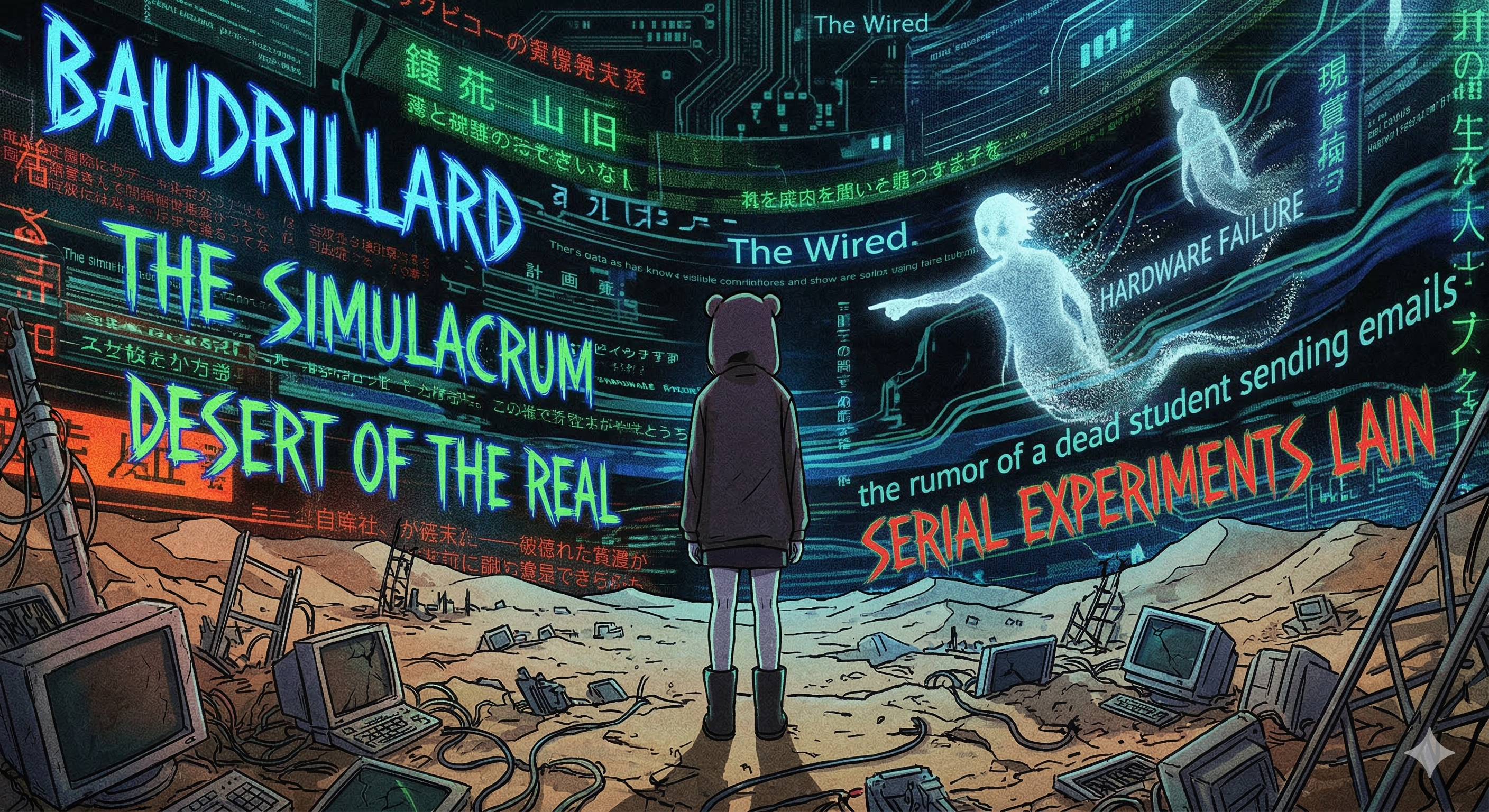
The Obsolescence of the Hero
The three-act structure and the Hero's Journey function as the default algorithms of the entertainment industry. This framework is no longer an analytical tool; it is a rigid production metric. Modern interactive media and generative systems expose the structural limitations of this linear model.
Hypermedia and generative AI reject linear pathways. Forcing a user down a singular narrative track represents a failure in interaction design. This article covers the transition from arborescent, linear frameworks to emergent, reticular topologies.
1. The Industrialization of Myth
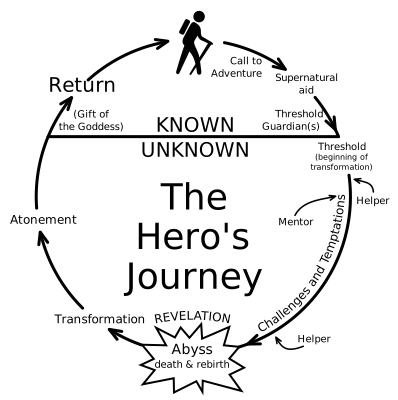
Joseph Campbell's 1949 monomyth originated as a descriptive analysis of global mythologies. Industrial production—specifically Christopher Vogler's 12-step adaptation—converted this observation into a strict operational prescription.
This standardization maps character progression to exact temporal plot points, establishing a metric of narrative efficiency that prioritizes market predictability over thematic variance.
Hollywood Algorithm Metrics
The standardization of script beats. Emotional rhythm is mathematically engineered to trigger specific responses at exact timestamps.
2. Academic Critique
Contemporary academic consensus rejects the monomyth due to its structural ambiguity and ethnocentrism. The framework is broad enough to be applied to disparate narratives through interpretative bias.
The model exhibits an individualistic bias. By prioritizing a single hero, the structure fails to process narratives of collective action. It enforces a Eurocentric logic of ascension and triumph across non-Western cultural outputs.
"Until the lion learns to write, every story will glorify the hunter. The Monomyth is the ultimate algorithmic constraint of the hunter's perspective."
3. Hypermedia & The Rhizome
The alternative to arborescent rigidity is the rhizome (Deleuze and Guattari) and the hypermedia theories established by Lucia Santaella. Hypermedia operates as an infinite, non-hierarchical network.
Hypermedia organizes data into fluid cartographies. The narrative relies on the participatory navigation of the user, redefining them as an "interactor" rather than a passive recipient.
Topology: The Classical Monomyth
Closed Loop. The Hero faces a linear series of challenges. Predictable processing.
4. Emergent Narratives & Systemic Design
Systemic simulations (e.g., Dwarf Fortress) execute emergent narratives. Explicit narratives are pre-computed sequences. Emergent narratives are generated dynamically through the interactor's engagement with the system's rules.
Procedural content systems, such as the Nemesis System, show this shift. NPCs track interaction histories to generate personalized, dynamic conflicts, subverting static, three-act antagonist arcs.
5. Hauntology and Narrative Justice
Mark Fisher's concept of Hauntology defines contemporary culture as trapped by the unfulfilled trajectory of the 20th century. Formal innovation stagnates. The continued reliance on the Hero's Journey indicates a cultural inability to process new structural paradigms, delivering legacy formulas through high-resolution infrastructure.
Generative AI initiates a structural reallocation of narrative generation. It lowers the capital barrier for rendering complex audiovisual metaphors.
Narrative Justice defines storytelling as an architecture of inclusion and exclusion. Machine learning models enable marginalized demographics to generate counter-narratives and reconstruct historical data streams without traditional industry gatekeeping.
>> Bibliographic_References.log
- [01] Campbell, J. (1949). The Hero with a Thousand Faces.
- [02] Deleuze, G., & Guattari, F. (1980). A Thousand Plateaus.
- [03] Santaella, L. (2004). Navegar no Ciberespaço: O Perfil Cognitivo do Leitor Imersivo.
- [04] Fisher, M. (2014). Ghosts of My Life: Writings on Depression, Hauntology and Lost Futures.